

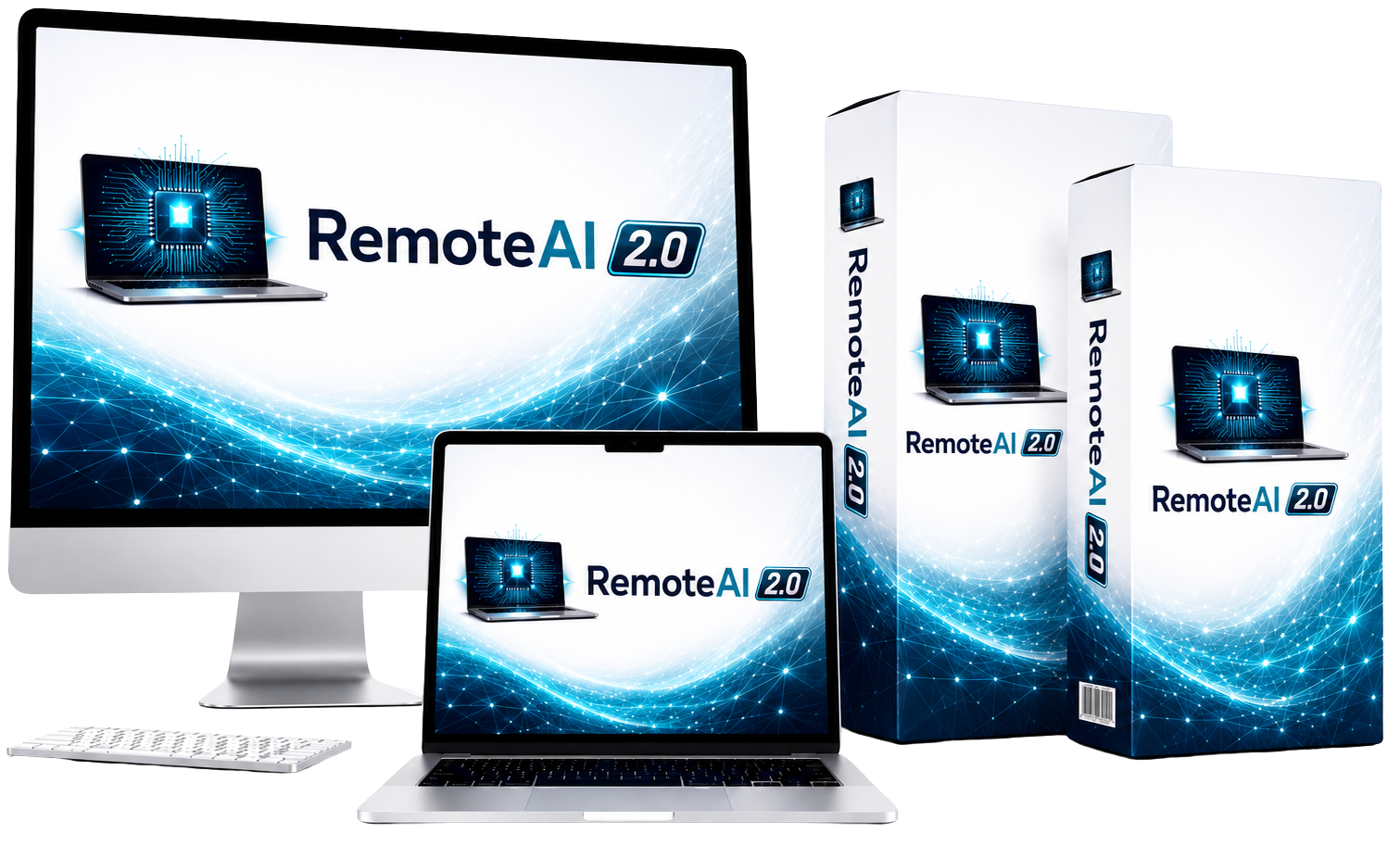
RemoteAI 2.0 Review 2026: What Is RemoteAI?
RemoteAI 2.0 is positioned as an all-in-one, cloud-based AI platform designed to combine multiple AI models, AI automation, and digital-content tools inside a single workspace. Its main differentiator is the use of the OpenClaw agent/automation layer, which is intended to go beyond simple chatbot responses and help execute multi-step tasks.
Instead of opening separate platforms for writing, coding, graphics, research, websites, video, and automation, RemoteAI 2.0 is designed to bring these capabilities together through one cloud-based environment. The product materials also promote access to 100+ AI models, persistent memory, and a private cloud-server environment.
How Does RemoteAI 2.0 Work?
The basic concept is fairly straightforward:
1. Access the cloud dashboard
You work through the RemoteAI environment rather than relying entirely on your own computer’s processing power.
2. Give the AI an objective
Instead of only asking a question, you can provide a broader task or goal.
3. OpenClaw handles the workflow
OpenClaw is the agent-style technology designed to connect AI with tools and execute supported actions. The official OpenClaw project describes it as an AI that can perform tasks such as managing email, calendars, and other connected workflows.
4. Use different AI capabilities
RemoteAI 2.0 is marketed with access to numerous AI models and capabilities for tasks such as content creation, coding, websites, graphics, video, research, and automation.
5. Review the result
Despite the automation angle, I’d recommend treating AI output as something to review and refine, particularly for business, marketing, publishing, or customer-facing work.
>>> Get EarlyBird Discount + Bonus Bundle <<<
BONUS #1
The AI Agency Masterclass
A step-by-step video series showing you exactly how to find clients and sell the services your RemoteAI 2.0 server provides. We show you the “Low-Hanging Fruit” niches where business owners are desperate for AI help.
BONUS #2
The OpenClaw Automation Vault
A collection of “Set & Forget” workflows. Want to automate a YouTube channel? Or a 24/7 customer support bot? Just import these scripts into your OpenClaw dashboard and watch the magic happen.
BONUS #3
One-Click App Builder
Turn any AI output into a sellable software application or mobile game. No coding required. Use RemoteAI 2.0 to generate the logic, and this tool to package it for the App Store.
BONUS #4
The “3 AM Concierge” Script
The exact autonomous settings we use to monitor ticket sites and restaurant bookings. This alone can pay for the entire software 100x over in your first week.
BONUS #5
Unlimited Commercial License
As mentioned, you can sell anything you create. No royalties. No limits. No headaches.

RemoteAI 2.0 Review 2026 – Features and Benefit
Key Features and Benefits of RemoteAI 2.0
1. OpenClaw-Powered AI Automation
One of the biggest selling points is the OpenClaw automation engine.
Rather than simply asking an AI a question and manually completing every step yourself, RemoteAI 2.0 is designed around giving the system a broader objective and allowing the automation layer to handle supported tasks and workflows.
Potential benefit: This can reduce repetitive manual work and make AI more useful for multi-step projects.
2. Access to 100+ AI Models
RemoteAI 2.0 is marketed with access to 100+ premium AI models covering different types of writing, research, coding, creative, and business tasks.
Potential benefit: Instead of maintaining several separate AI subscriptions for different purposes, users can potentially access multiple AI capabilities from one environment.
3. Private “Ghost Server”
The platform is promoted with a dedicated private cloud-server environment referred to as a Ghost Server.
The idea is that AI-related workloads can be handled remotely rather than relying entirely on the hardware sitting on your desk.
Potential benefit: This can be useful for users who want cloud-based AI workflows without needing to maintain their own dedicated computing infrastructure.
4. Content Creation
RemoteAI 2.0 is positioned to assist with a broad range of content tasks, including written content and other digital assets.
This can be useful for:
- Blog content
- Marketing copy
- Email campaigns
- Social media content
- Scripts
- Research
- Digital products
Potential benefit: Marketers and creators can use AI to accelerate the content-production process while retaining human review and editing.
5. Website and Funnel Creation
The product information also promotes capabilities for creating websites, applications, landing pages, and marketing assets.
Potential benefit: Entrepreneurs and marketers can potentially use one AI environment to move from an initial idea to a working digital asset more quickly.
6. AI-Assisted Coding
RemoteAI 2.0 is also marketed for coding and software-related tasks.
This can include assistance with:
- Websites
- Applications
- Scripts
- Software concepts
- Coding projects
Potential benefit: Even users without extensive programming experience may be able to use AI assistance to prototype ideas and accelerate development.
7. Persistent AI Memory
Another advertised capability is persistent memory, allowing the system to retain relevant information across tasks rather than treating every interaction as completely isolated.
Potential benefit: This can make longer-running projects and repeated workflows more convenient because users don’t necessarily have to restate the same context every time.
8. Marketing Automation
RemoteAI 2.0 is particularly relevant to digital marketers because its advertised capabilities extend into marketing workflows.
You could potentially use AI assistance for:
- Campaign ideas
- Ad copy
- Landing pages
- Email sequences
- Content planning
- Market research
- Social media content
Potential benefit: One centralized AI workspace can reduce the amount of time spent moving information between different applications.
9. Commercial-Use Rights
The current product information states that commercial rights are included with the offer.
That makes the platform potentially more interesting for freelancers, agencies, marketers, and entrepreneurs who want to use AI-assisted creations in commercial projects.
However, buyers should always check the current license terms before using generated material commercially.
10. Cloud-Based Accessibility
RemoteAI 2.0 is presented as a cloud-based system, meaning users don’t have to depend entirely on their local computer for the platform’s AI environment.
Potential benefit: This can make the platform more convenient for people who work across different computers or mobile devices.


Remote AI 2.0 Review 2026 – My Experience Using It?
After taking a close look at RemoteAI 2.0, its advertised workflow, features, OpenClaw integration, and overall positioning, I found the platform particularly interesting for one reason: it aims to bring multiple AI capabilities and automation into a single environment.
Instead of relying on separate tools for writing, research, coding, graphics, websites, marketing, and automation, RemoteAI 2.0 is designed to bring these different workflows together through a cloud-based AI platform. The product is also promoted with access to 100+ AI models and an OpenClaw-powered automation layer.
My First Impression of RemoteAI 2.0
The first thing that stands out is the platform’s focus on reducing tool switching.
A typical AI workflow can quickly become complicated. You might use one application to write content, another to create images, another for research, and another for coding or automation.
RemoteAI 2.0 takes a different approach by attempting to centralize many of these activities.
For marketers, freelancers, creators, and online entrepreneurs, that could make the overall workflow easier to organize.
The OpenClaw Experience
The most interesting part of RemoteAI 2.0, in my opinion, is its OpenClaw-powered approach.
Rather than treating AI purely as a question-and-answer tool, the platform is positioned around task-based AI assistance. The idea is that you can describe what you want to accomplish and allow the AI environment to handle more of the intermediate work.
For example, a marketer could potentially use an AI workflow to research a topic, develop content, create marketing assets, and organize the resulting materials without constantly moving between unrelated platforms.
That doesn’t mean everything should be left completely unattended. I would still review important content, factual claims, code, marketing materials, and customer-facing assets before publishing or using them commercially.
You Can Go Crazy With As Many Prompts As You Want…
There Are ZERO Limits With RemoteAI 2.0!
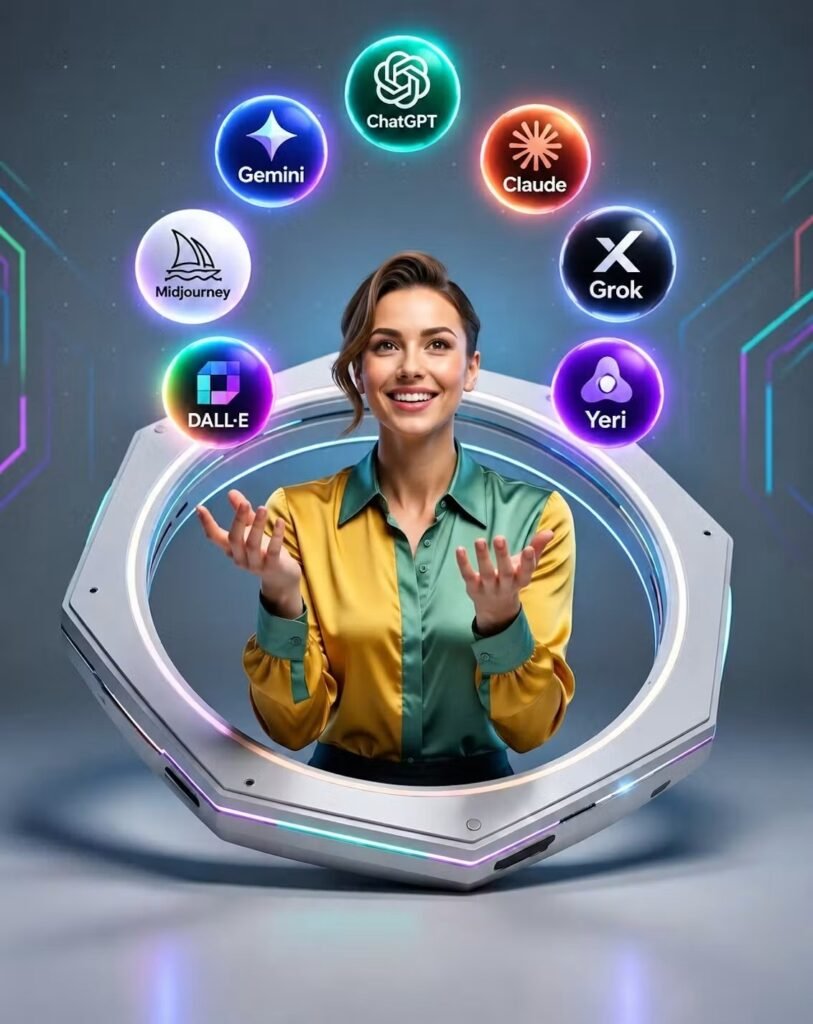
The Heavy Hitters Included In Your Server:
- ChatGPT-5.5 PRO: The absolute gold standard for versatility and complex reasoning.
- Claude Fable 5: The king of human-like nuance, creative writing, and advanced coding.
- Gemini 3.1 Pro: Google’s powerhouse with a massive context window—analyze entire libraries of data in seconds.
- Grok-2 (Unfiltered): Real-time access to X (Twitter) data for the most current trends and raw intelligence.
- DeepSeek-V3.2: The new logic champion that is currently writing 70% of the world’s most efficient code.
- Llama 3.1 (405B): The open-source monster that crushes benchmarks and provides total flexibility.
Pros and Cons
✅ RemoteAI 2.0 Pros
1. All-in-one AI environment
RemoteAI 2.0 is designed to combine writing, research, coding, graphics, video, websites, marketing, translation, and automation in one environment. This could reduce the need to jump between multiple AI platforms.
2. 100+ AI models
The product materials promote access to more than 100 AI models, giving users flexibility across different types of tasks. Model availability should still be verified at the time of purchase.
3. OpenClaw-powered automation
The OpenClaw layer is one of the more interesting aspects of the platform because it’s positioned around executing broader, multi-step workflows rather than simply generating individual chatbot responses.
4. Cloud-based workflow
The platform is marketed around a cloud-based environment and dedicated “Ghost Server” infrastructure, potentially reducing dependence on the user’s local computer for certain AI workloads.
5. Persistent memory
Persistent memory is promoted as a feature that can help maintain context across tasks, which could be useful for longer projects and recurring workflows.
6. Useful for marketers and creators
Affiliate marketers, freelancers, agencies, content creators, and entrepreneurs may find the combination of content, marketing, coding, website, and automation capabilities particularly useful.
7. Commercial-use positioning
The current offer states that commercial-use rights are included. However, buyers should review the exact license terms before using AI-generated material commercially.
❌ RemoteAI 2.0 Cons
1. Potential learning curve
Having many models, tools, and automation capabilities in one platform can be powerful, but it can also make the system feel overwhelming for beginners.
2. AI still needs supervision
Automation doesn’t mean you can completely walk away. AI-generated content, code, marketing assets, and other outputs should be reviewed for accuracy, quality, and compliance before use.
3. Results depend on your instructions
The quality of automated output depends heavily on how clearly you define the task, the available tools/integrations, and how you configure the workflow.
4. Model availability can change
A platform advertising 100+ models today may not offer exactly the same model lineup later. AI providers can change access, pricing, APIs, or licensing.
5. Integrations may require additional setup
Some advanced workflows can depend on third-party services, permissions, accounts, or integrations. Buyers shouldn’t assume every advertised workflow works completely out of the box.
6. More isn’t always better
If you only need a basic AI chatbot for occasional writing or brainstorming, RemoteAI 2.0’s broader feature set may be unnecessary.
7. Upsells are part of the funnel
The current offer includes optional upgrades beyond the front-end product. These can provide additional capabilities, but buyers should evaluate each upgrade independently rather than assuming they are required.
The Possibilities Are TRULY LIMITLESS...
What if one AI platform could help you move from idea → creation → execution without constantly jumping between a dozen different tools?
That’s the big idea behind RemoteAI 2.0.
Instead of positioning AI as simply a chatbot for answering questions, RemoteAI 2.0 is designed around a much broader workflow. Its combination of multiple AI models, cloud-based infrastructure, OpenClaw-powered automation, persistent memory, and creative and business tools opens up a surprisingly wide range of possibilities.

Who should use it?
1. Affiliate Marketers
RemoteAI 2.0 could be a good fit for affiliate marketers who regularly need to create:
- Review articles and blog content
- Landing pages and funnels
- Email sequences
- Ad copy
- Social media content
- Promotional graphics
- Marketing campaigns
The ability to combine different AI capabilities in one environment can potentially reduce the need to jump between multiple tools.
2. Content Creators & Bloggers
If you’re producing content across multiple formats, RemoteAI 2.0 may be worth considering.
You can potentially use AI assistance for:
Articles → Scripts → Images → Videos → Social Posts → Promotional Content
That makes the platform particularly interesting for creators who need to maintain a consistent publishing schedule.
3. Freelancers
Freelancers offering AI-assisted services could potentially use RemoteAI 2.0 to streamline repetitive parts of their workflow.
Possible service categories include:
- Copywriting
- Content creation
- Graphic design
- Video-related services
- Website creation
- Coding
- Research
- Marketing
The product is also promoted with commercial-use rights, although freelancers should review the current license terms before using the platform for client work.
4. Entrepreneurs & Online Business Owners
RemoteAI 2.0 may appeal to entrepreneurs who need help creating different parts of an online business.
For example:
Business idea → Research → Website → Content → Funnel → Marketing → Automation
The platform’s broad feature set is intended to support several of these activities from a centralized environment.
5. Agency Owners
Small agencies handling multiple clients may find the automation angle particularly interesting.
Instead of manually repeating the same tasks for every client, AI-assisted workflows could potentially help with:
- Content production
- Social media assets
- Marketing copy
- Research
- Reporting
- Website work
- Repetitive administrative tasks
However, agency owners should still maintain human quality control—particularly when AI-generated material is being delivered to paying clients.
6. Developers & Software Builders
RemoteAI 2.0 is also positioned for coding and software-related projects.
Developers and builders can potentially use AI assistance for:
- Writing code
- Debugging
- Prototyping
- Websites
- Applications
- Plugins
- Software projects
This is especially relevant for developers who want access to multiple AI models rather than relying on a single model for every coding task.
7. E-Commerce Sellers
E-commerce businesses can potentially use AI assistance for product-related content and marketing workflows.
Examples include:
- Product descriptions
- Advertising copy
- Social media content
- Promotional graphics
- Email campaigns
- Customer communication
- Market research
The real advantage here would be reducing repetitive content and marketing work—not replacing the need for strategic decision-making.
8. Busy Professionals
RemoteAI 2.0 could also appeal to professionals who want AI assistance with repetitive digital tasks.
The platform’s cloud-based approach and automation capabilities are intended to make it possible to delegate certain supported workflows to AI rather than manually completing every step.
Price and Evaluation
💰 How Much Does RemoteAI 2.0 Cost?
The current launch offer has been promoted at approximately:
Regular Price: $197
Current Promotional Price: $14.44 one-time payment
The vendor’s own JV material also describes the front-end offer as a one-time payment with no monthly fees, although pricing and offer terms can change during or after the launch.
Important: Because launch pricing can change quickly, check the official checkout page for the exact price before publishing your review or sending visitors to the offer.
Is RemoteAI 2.0 a One-Time Payment?
The front-end offer is currently promoted as a one-time payment, rather than a recurring monthly subscription.
However, RemoteAI also has optional upgrades in its sales funnel. For example, third-party launch information identifies a PRO Edition as an optional upgrade.
So I’d distinguish between:
Front-End: RemoteAI 2.0
Optional OTOs: Additional features/upgrades
Total potential cost: Depends on which upgrades you choose
You do not necessarily need every upgrade to use the core product.
📊 My Evaluation of the Price
At roughly $14.44, the entry price is relatively low compared with the breadth of capabilities being promoted.
The current offer includes positioning around:
- 100+ AI models
- OpenClaw-powered automation
- Private cloud/“Ghost Server”
- Persistent AI memory
- Content creation
- Image and video generation
- Coding
- Website and funnel creation
- Marketing workflows
- Commercial-use rights
- Cloud-based access
These features are part of the vendor’s current promotional positioning.
My Rating
| Category | Rating |
|---|---|
| Entry price | ⭐⭐⭐⭐⭐ |
| Feature breadth | ⭐⭐⭐⭐⭐ |
| AI automation potential | ⭐⭐⭐⭐½ |
| Beginner accessibility | ⭐⭐⭐⭐ |
| Value at launch price | ⭐⭐⭐⭐⭐ |
| Transparency of long-term pricing | ⭐⭐⭐½ |
| Overall value | 9/10 |
CONTACT US WITH CONFIDENCE

My Final Verdicts On RemoteAI 2.0 Review
After looking closely at RemoteAI 2.0, its features, automation capabilities, AI model access, pricing, pros and cons, and intended audience, I believe this is a platform worth considering—particularly if you want to do more with AI than simply generate text.
What makes RemoteAI 2.0 interesting is the combination of 100+ AI models, OpenClaw-powered automation, cloud-based infrastructure, persistent memory, and a broad collection of content, marketing, coding, and creative capabilities. Instead of constantly moving between different AI platforms, the goal is to bring many of those workflows together under one environment.
What I Like Most About RemoteAI 2.0
The biggest advantage, in my opinion, is convenience.
If you’re an affiliate marketer, freelancer, content creator, entrepreneur, developer, or agency owner, you may already be using several different AI tools for different jobs.
RemoteAI 2.0 takes a more centralized approach.
You can potentially use one environment for:
- Content creation
- Research
- Marketing
- Coding
- Website creation
- Graphics
- Video
- Automation
- Digital products
- Business workflows
The OpenClaw component is particularly interesting because the platform is positioned around completing broader, multi-step tasks rather than simply answering individual prompts.
What I Would Keep in Mind
RemoteAI 2.0 isn’t a magic button for building a successful online business.
AI can dramatically accelerate certain tasks, but you still need to provide good instructions, review the output, correct mistakes, and make the final strategic decisions.
I’d also recommend checking the current model availability, license terms, integrations, refund policy, and exact pricing before purchasing because these details can change during a software launch.
And if you’re considering optional upgrades, don’t automatically buy every OTO. First determine whether the additional features actually solve a problem you have.
So, Is RemoteAI 2.0 Worth It?
For the right user, yes.
If you want a simple chatbot for occasional questions, RemoteAI 2.0 may be more than you need.
But if you’re looking for a broader AI environment that combines multiple models, automation, creative tools, and business-oriented workflows, the proposition becomes much more compelling.
I’d particularly consider it if you’re:
✓ An affiliate marketer
✓ A content creator
✓ A freelancer
✓ An online entrepreneur
✓ An agency owner
✓ A developer or digital builder